

|

|

|

|

|
On July 6, we received the certificate of conformity for KÖSTER TPO 2.0 FR from FM Approvals and were thus listed with our product in their database. The database is used by roofers, architects, engineers and planners to search, configure and verify certified and FM-tested roofing products as well as complete roof structures..
FM Approvals 4470 – Test Methods for Roof Waterproofing Systems at a Glance
FM Global is one of the world's leading industrial insurers, specializing in the protection of real assets and business interruptions. In contrast to traditional insurance companies, FM Global pursues a preventive approach: The aim is to minimise risks in advance through scientifically sound tests, technical guidelines and quality standards. For this reason, FM Global develops and operates FM Approvals, its own internationally recognized certification program for construction products and technical systems.
The FM Approvals 4470 test standard evaluates flat roof systems with regard to their resistance to various mechanical and climatic influences. It is not only the roof waterproofing membrane that is tested, but always the complete roof structure – consisting of supporting structure, vapour barrier, thermal insulation, fastening system and roof waterproofing. This is because the performance of a flat roof depends largely on the interaction of all components.
FM approval therefore not only serves as proof of quality for individual products, but also confirms the performance of a defined roof system under practical load conditions. Especially in industrial, logistics, production and data center buildings, investors, planners and insurers often demand the use of FM-tested roof systems to reduce the risk of property damage and the resulting business interruptions.
Wind suction test
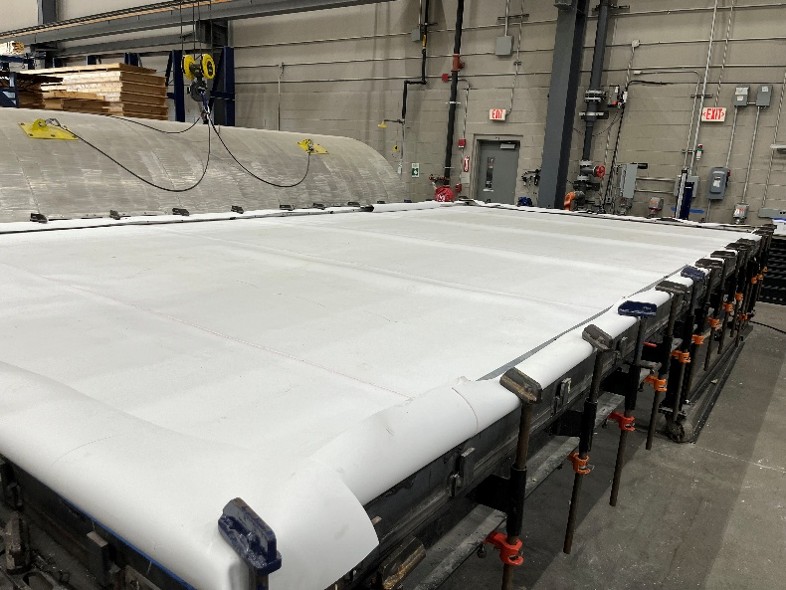
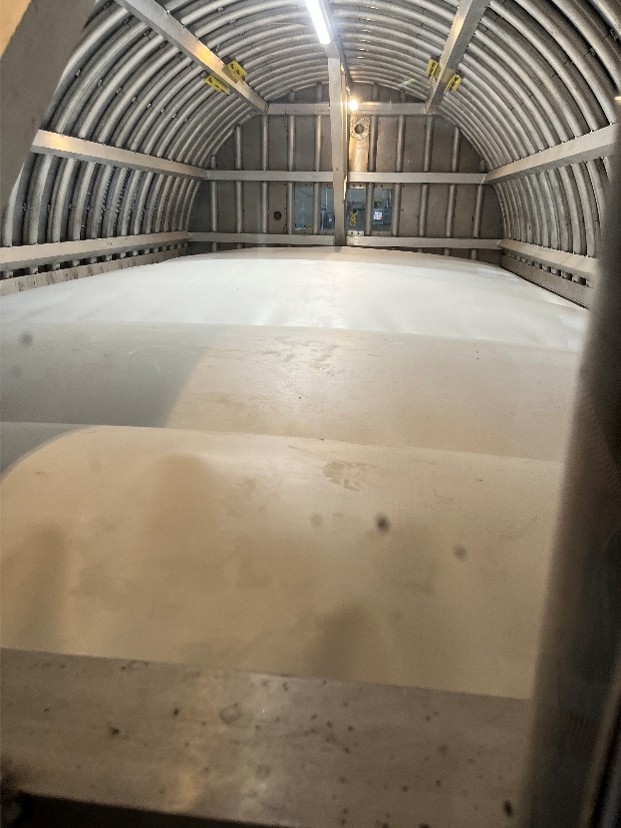
To assess the resistance to wind stress, a complete roof structure is mounted on a test bench and cyclically loaded with negative pressure. The load simulates the suction forces that act on flat roofs during storm events. During the inspection, it is monitored whether individual layers are peeling off, fastening elements fail or damage to the roof waterproofing occurs. At the same time, the interaction of all components of the roof system is evaluated.
Fire Testing
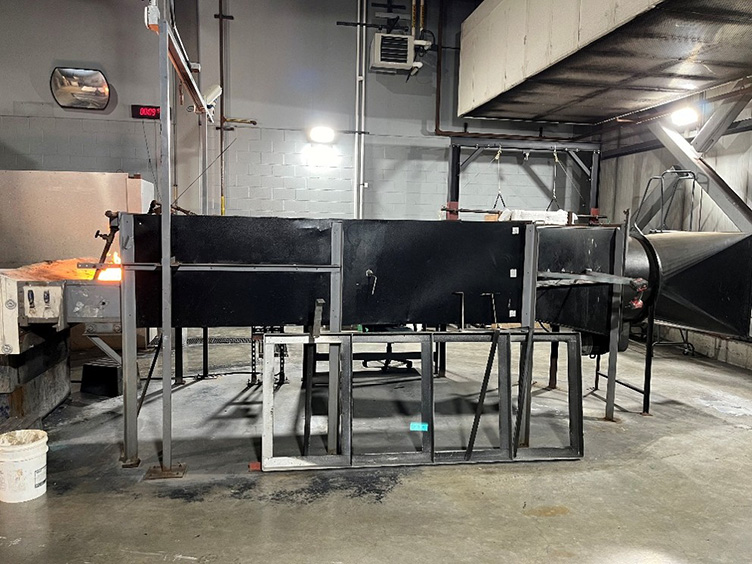
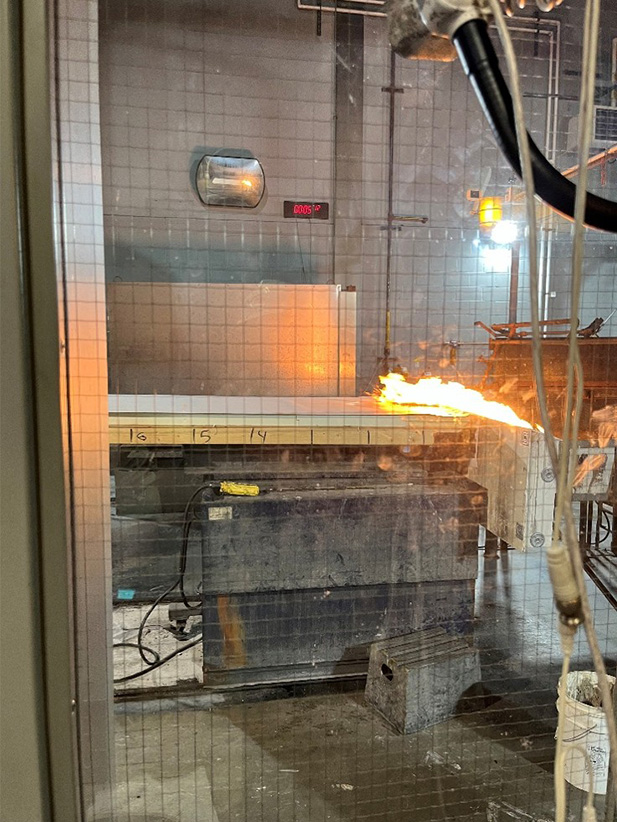
The fire test examines the behaviour of the roof system in the event of external fire exposure. It is assessed whether flames can spread over the roof surface or penetrate the roof structure. In addition, it is analyzed how the individual materials behave under thermal stress and whether the overall system maintains its protective function.
Hail resistance
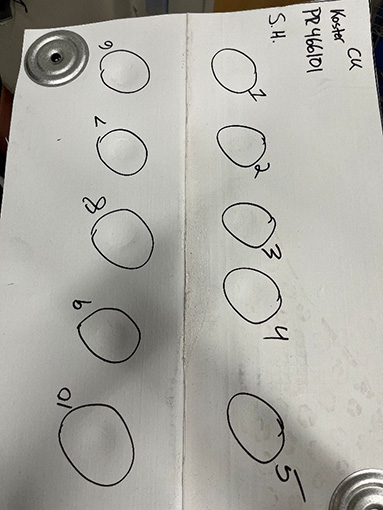
To simulate hail events, the roof surface is loaded with defined impact bodies whose energy corresponds to natural hailstones. This is followed by an examination for cracks, penetrations, seam damage or detachment. The aim is to prove that the roof waterproofing continues to perform its function reliably even after a hail event.
Leak testing
After completion of the mechanical and thermal load tests, the watertightness of the roof system is checked. This ensures that no leaks have occurred as a result of the previous stresses and that the waterproofing permanently fulfils its protective function.
Walkability
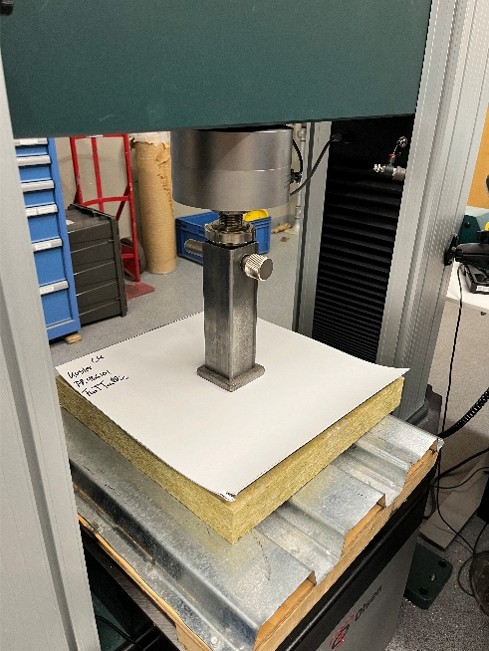
Flat roofs must be walked on regularly for maintenance, inspection or repair work. As part of the FM test, it is therefore examined how the roof system behaves under repeated inspections. This assesses whether the roof waterproofing, the seams or the layer composite are damaged by typical pedestrian loads or whether their functionality is impaired. The aim is to ensure a permanently safe use of the roof area in regular building operation.
Quality assurance and production monitoring
FM certification does not end with the passing of laboratory tests. Part of the approval process is regular audits of the production facilities and the monitoring of the manufacturing processes. This ensures that the mass-produced products permanently correspond to the properties of the originally tested roof systems.
Conclusion
FM Approvals 4470 demonstrates the performance of complete flat roof systems under realistic loads. The focus is on the resistance to wind suction, fire stress, hail, mechanical loads and the permanent tightness of the roof system. The test program is supplemented by the evaluation of walkability and continuous monitoring of production quality. The system-oriented testing approach offers planners, builders and insurers a high level of assurance in terms of quality, durability and reliability. Especially in demanding industrial and commercial buildings, FM approval is therefore an important proof of quality and safety.


